
By: Ronit Yarosky, NIFC Montreal Regional Council member
As often happens with us “lefty” Jews, I was recently in a conversation about the strain Israel and Palestine places on friendships and families. As I listened, I found myself thinking: it’s really not easy to want to love everyone.
Tragically, it often feels easier to dislike or even hate than to do the harder work of staying connected with people we are “not supposed” to connect with—especially when they are framed as enemies.
Remember the bully in 6th grade? As children we don’t yet have the maturity to understand what drives that behaviour. As adults, we know the teaching
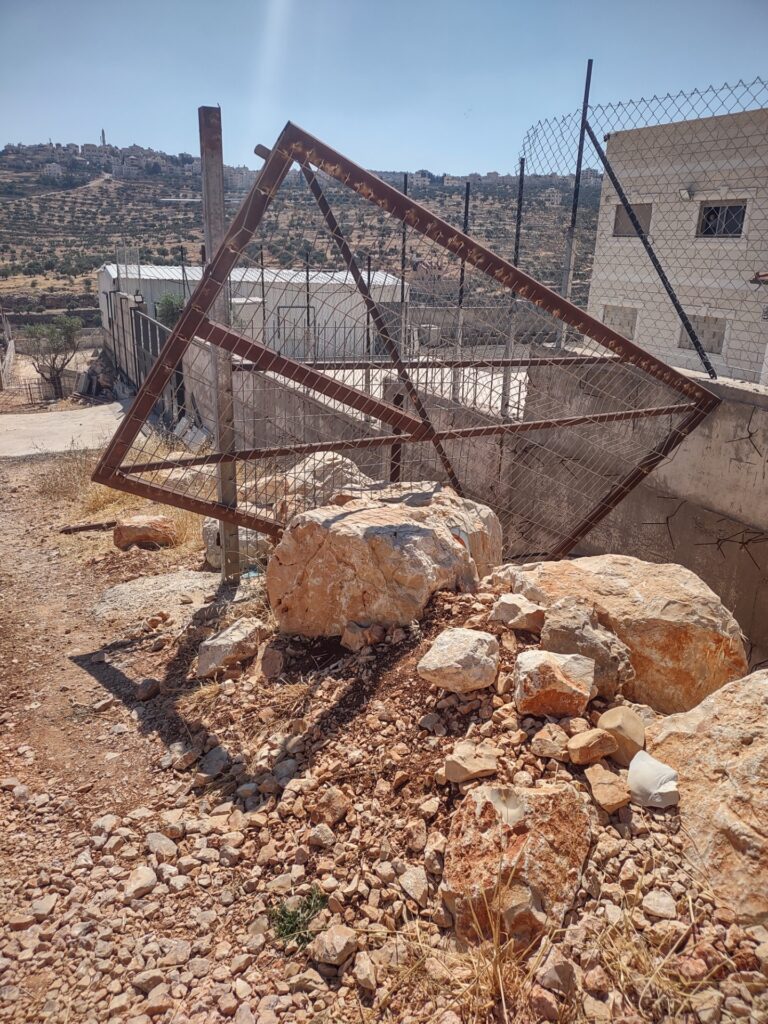
Palestinian property damaged by settlers in the West Bank.
“do not judge your fellow until you have reached their place” (Pirkei Avot), and we understand, intellectually, that harm often comes from pain. But when it’s personal, our emotions tend to take over. Not a great recipe.
Let me be clear: I strongly condemn violence. All violence. But neither Judaism nor my conscience allow me to flatten people into only the worst—or best—things they have done.
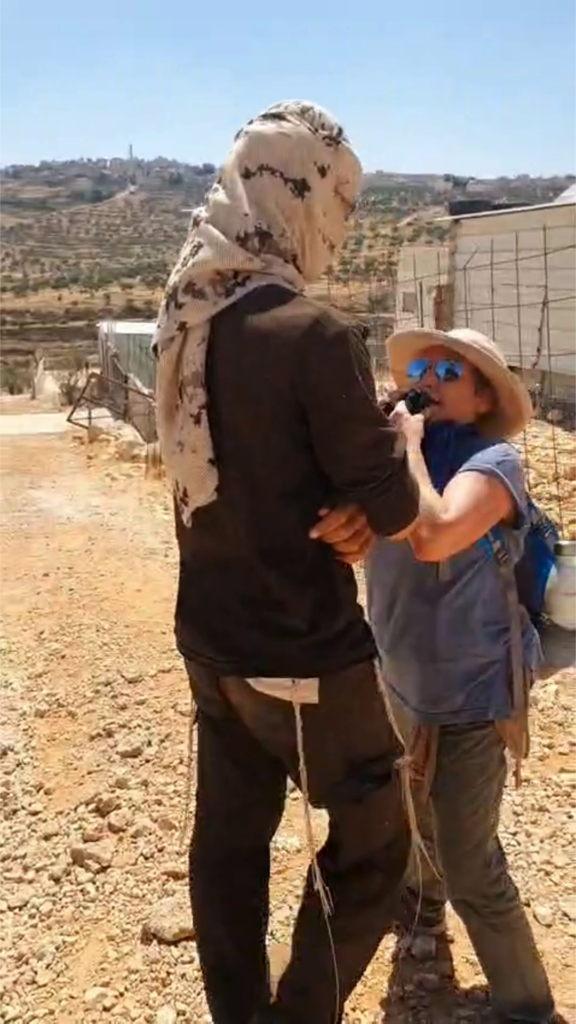
Ronit confronts a settler outside a Palestinian home in the West Bank.
The concept of “protective presence” wasn’t new to me. I had read about it, watched videos, even engaged in similar work before. I was also a soldier in the IDF during the First Intifada and a peace activist during the Second. But being on the ground 24/7 brought a far deeper understanding of what is happening now.
In the Occupied West Bank, Palestinians and Bedouins are not facing occasional harassment by a few “hilltop youth.” They are living under constant intimidation and violence: livestock brought into yards, fences cut, property stolen or destroyed, water tanks emptied, homes entered, people threatened or beaten, fires set—day and night, without pause.
And it happens with near-total impunity. Police often do not arrive, or arrive only after settlers have left, sometimes turning their attention instead to Palestinians or volunteers. I saw this repeatedly. On one occasion, a police officer violently shoved a volunteer to the ground for no reason.
More than once, we were trapped inside a family compound because settlers blocked the gate. On another day, after climbing out through barbed wire and a wall, we encountered a masked settler aggressively trying to intimidate us—standing so close he touched me while I was speaking to police.
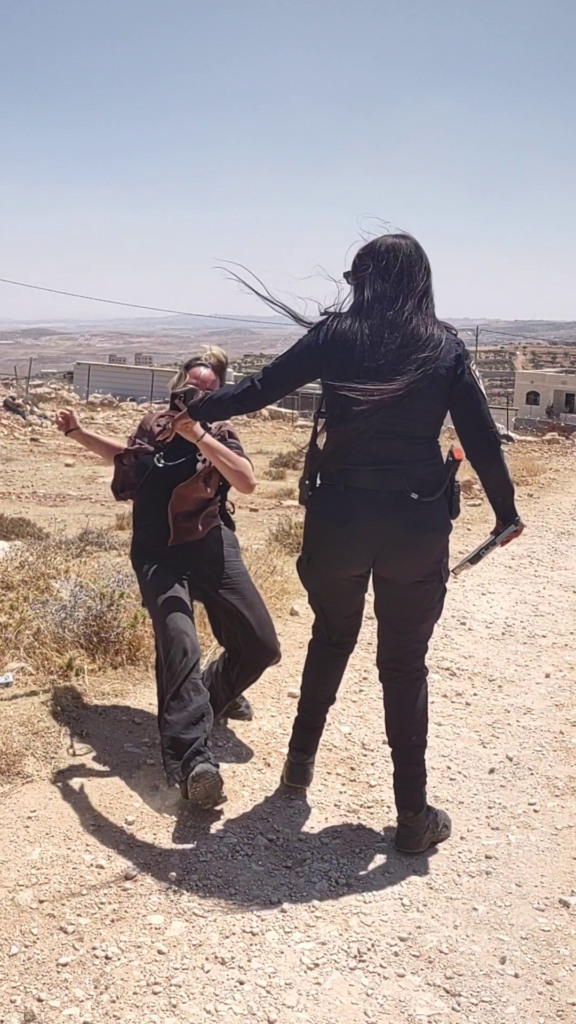
A member of the Israel Police knocks down a Protective Presence activist in the West Bank.
At another home, a settler assaulted me and others, blocked a man from entering his own house, and emptied the family’s water tanks. When we called police, they hung up or refused to come. Since then, the tanks have been emptied daily.
Over and over, police and soldiers arrived only after settlers had left, then questioned Palestinians and activists rather than those who had been attacking them.
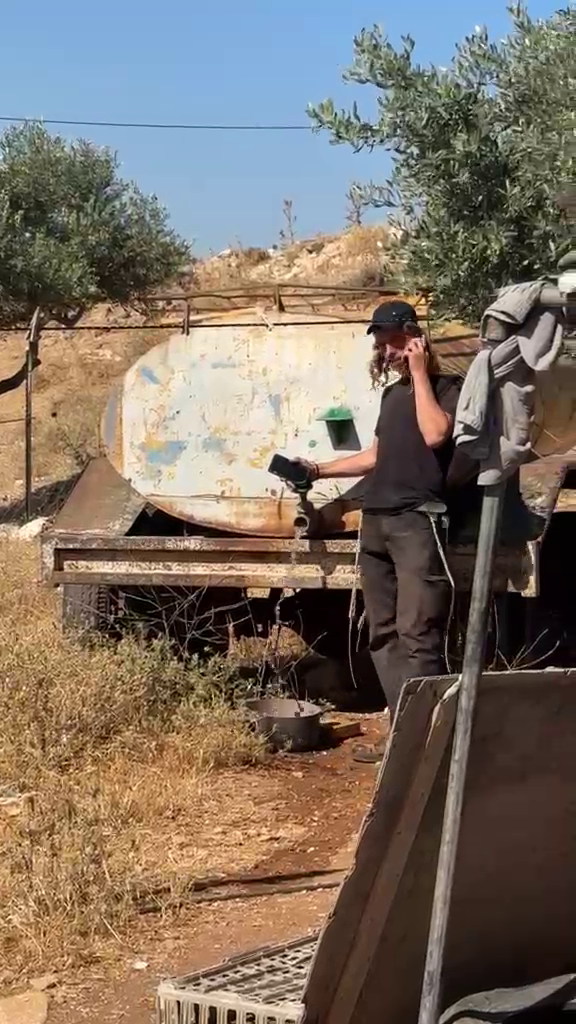
Settlers empty Palestinian-owned water tanks.
And yet, in the midst of all this, families welcomed us with tea, food, humour, and extraordinary generosity. I met people whose homes had been destroyed and children terrorized, who still spoke about coexistence and living together.
Protective presence is not a solution. It will not end the occupation. But it matters. I saw settlers back away. I saw families breathe a little easier because they were not alone. It means those who have been abandoned are not completely alone.
There are not enough volunteers. Every day and night, families are left vulnerable because others cannot be everywhere at once.
Find out how you can volunteer on the ground in the West Bank, or give now to our campaign to end settler violence.
Ronit Yarosky is a member of the NIFC Montreal Regional Council.